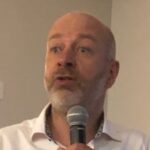
Pierre Toussaint
(Liège, Belgique)
Comment avoir les mots justes et l’attitude correcte qui permettent de maintenir une communication fluide entre le patient et l’équipe soignante, entre soignants afin que chacun puisse pleinement remplir sa fonction durant une procédure chirurgicale ? Quelle attitude, quels mots employer pour que le patient sache que nous sommes tous là pour lui exclusivement durant toute l’intervention ? Voici la manière que j’ai choisie pour répondre à ces questions.
L’initiation à la posture juste est une connaissance qu’on acquiert par l’expérience personnelle en traversant un parcours de trois ans (cinq sessions par an). Cette initiation est basée sur les travaux de Freud et Jung. Ils décrivent 5 blessures que chacun a vécues plus ou moins intensément durant les premières années de sa vie et contre lesquelles nous avons développé des comportements afin qu’elles ne se reproduisent pas mais qui paradoxalement génèrent la réapparition de ceux-ci.
Le passage à l’Ecole De La Posture Juste (EDLPJ) est une initiation car elle apporte une connaissance basée sur l’expérience personnelle, ce n’est pas qu’un apprentissage théorique, c’est quelque chose à vivre, à expérimenter. Elle permet une conscientisation de ces blessures qui amène la possibilité d’une dynamique plus harmonieuse entre individus. Lors des sessions de la première année, on apprend à reconnaître ces blessures en soi. En effet, pour appréhender le monde, il faut d’abord se connaître, comprendre comment nous interagissons avec les autres. Au cours de la seconde année, on apprend à les identifier chez l’autre. La posture juste permet de s’adapter aux situations de la Vie et de fluidifier la relation à l’autre, de prévenir et de guérir des situations de crise créées par nos névroses respectives. Elle est autant une attitude physique que la manière dont on va s’adresser à l’autre. Elle permet simultanément un apaisement personnel et de l’autre qui se sent entendu et respecté par la prise d’une posture physique et par l’utilisation d’un langage approprié à chaque relation interpersonnelle. Durant la troisième année, on approfondit la connaissance de l’autre de manière plus globale, on continue notre apprentissage à reconnaître sa manière de fonctionner avec ses blessures dans les relations interpersonnelles et on met en pratique cette posture juste.
How can we find the right words and adopt the right attitude in order to maintain smooth communication between the patient and the medical team, as well as amongst the team, whatever the circumstances, so that everyone can fully perform their role during a surgical procedure? What attitude and words should be used to ensure the patient knows that we will be focused on them exclusively throughout the entire procedure? Here is the approach I have chosen to answer these questions.
The initiation at the EDLPJ (Ecole de la Posture Juste that I chose to translate into the « School for the Right Posture ») is a knowledge acquired through personal experience over a three years journey (five sessions per year). It is based on the work and research of Sigmund Freud and Karl Jung. In their work, they describe five wounds that everyone experiences to varying degrees during the formative years of childhood and adolescence. As a result of these wounds, we subconsciously develop behaviors to avoid and protect ourselves from reexperiencing them. However, paradoxically, these very behaviors often lead us to relive the wounds we once sought to escape.
The process at the EDLPJ is an initiation because it provides knowledge based on personal experience. It is not just a theoretical learning process; it is something to be lived, experienced and reflected upon. The teaching and knowledge learned allows for awareness of these wounds, leading to the possibility of a more harmonious dynamic between individuals. During the first-year sessions, we learn to recognize these wounds within ourselves. Indeed, to understand the world, we must first know ourselves and understand how we interact with others. After the second year, you will be able to recognize these wounds in others and adopt the right posture that will help maintain or restore a smooth relationship with others. This posture encompasses both physical behavior and verbal expression, including word choice, tone of voice, and overall communication. The final year’s sessions deepen our understanding of others and refine the use of the correct posture, allowing it to become a natural and intuitive practice.